


A newly circulating video, an earlier Texas Islamic conference, and the election of America’s first Muslim senator are bringing an important question into focus: Where does religious freedom end and the authority of American constitutional law begin?
The 2026 midterm elections may have changed more than the balance of political power in Washington. For some religious activists, the Democratic victories appear to represent an opportunity to advance a much larger vision for America’s future.
Emboldened by the Democrats’ sweeping victory, some of these Muslim leaders are saying so publicly.
Here is a Muslim leader celebrating the Democratic midterm results in Texas and describing the political change as an opportunity for Muslims.
Referring to the election, the speaker describes Dallas as having substantial potential for the ummah, the worldwide Muslim community, and invokes the phrase Darul Hijrah of America, a reference to a place of migration or refuge.
The speaker also discusses religious victory, perseverance, and martyrdom, using language that gives the remarks a distinctly ideological character.
Another passage is even more explicit: “People call this the Medina of America. Well, let’s make it that.”
And then: “We’re Muslim, and that’s why we want Islam for this country.”
The remarks were presented in the video as a celebration of the opportunities created by the election. The speakers’ names have not yet been independently established from the circulated clip, so their identities should be confirmed before attributing those specific statements to particular individuals.
But the language is important enough to examine in its own right.
Medina occupies a central place in Islamic history. It was the city where the Prophet Muhammad established a religious and political community after migrating from Mecca.
Describing Dallas as a modern American Medina can therefore carry implications beyond simply celebrating the growth of mosques or Muslim neighborhoods.
And that is where earlier statements from identifiable Islamic scholars become especially relevant.
On May 23, 2026, the Authentic Ilm Mission held a Memorial Day conference at the Mansfield Islamic Center in Arlington, Texas.
According to a MEMRI report published months before the midterm election, two scholars delivered statements about the future of Islam in America and the world.
Colorado-based Islamic scholar Karim Abu Zaid declared: “Islam will rule the world again.”
He also asserted that Islam possessed a unique moral superiority over other religions.
At the same conference, San Diego Islamic scholar Uthman Ibn Farooq described the ambition of eventually making America a Muslim country.
His stated objective was religious expansion through dawah, the Islamic practice of inviting others to embrace the faith.
Farooq described the approach as peaceful persuasion rather than forced conversion. That distinction is relevant to understanding his stated method. His long-term objective, however, was unmistakable: he wanted Islam to become America’s dominant religion.
These statements were made in May, well before the November election, and provide important background for understanding the more recent rhetoric.
MEMRI also reported that Abu Zaid was working to establish an Islamic complex in Richardson, a Dallas suburb, using a former church building. The planned facility included a religious academy, seminary, and full-time school, with Farooq involved in training Muslims to engage Christians and Jews in religious outreach.
Texas has experienced substantial population growth and immigration over recent decades, including residents arriving from Pakistan, Iran, Iraq, Bangladesh, Afghanistan, Egypt, Syria, and other countries with significant Muslim populations.
Texas’s foreign-born population is large (~5–6 million in recent ACS estimates, ~17–18% of the state), but Mexico dominates by far (~2.4 million).
Specific place-of-birth numbers (circa 2021) for selected Muslim-majority countries:
Pakistan: ~61,000
Nigeria: ~90,000–102,000 (Nigeria is roughly half Muslim)
Iran: ~31,000
Iraq: ~27,000
Bangladesh: ~16,000
Afghanistan: ~10,500–11,000
Egypt: ~13,500–14,000
Syria: ~6,700
Saudi Arabia: ~9,400
Turkey: ~9,400
Lebanon: ~9,300 (religiously mixed)
Smaller numbers exist from Somalia, Yemen, and other countries. Arab-origin ancestry in Texas has been estimated in the 300,000+ range in some community counts (not all Muslim).
India is a major source (~290,000–430,000 foreign-born) with a substantial Muslim minority, but it is not a Muslim-majority country.
The state’s Muslim community has also grown, with new mosques, schools, and religious institutions established throughout the Dallas–Fort Worth and Houston metropolitan areas.
The U.S. Mosque Survey documented the expansion of Islamic congregations nationally, from approximately 1,200 mosques in 2000 to 2,769 in 2020.
America has historically welcomed immigrants from widely different religious and cultural backgrounds. But its political system depends on a shared commitment to constitutional law, even when citizens disagree profoundly about religion, morality, and public policy.
Muslims around the world, historically, do not respect others’ religious or civic freedom. That is not my personal opinion. That is a historical fact.
No immigrant, religious leader, or political movement acquires authority to override the civil rights of other Americans simply because its beliefs demand a different legal order. That principle applies equally to every religion.
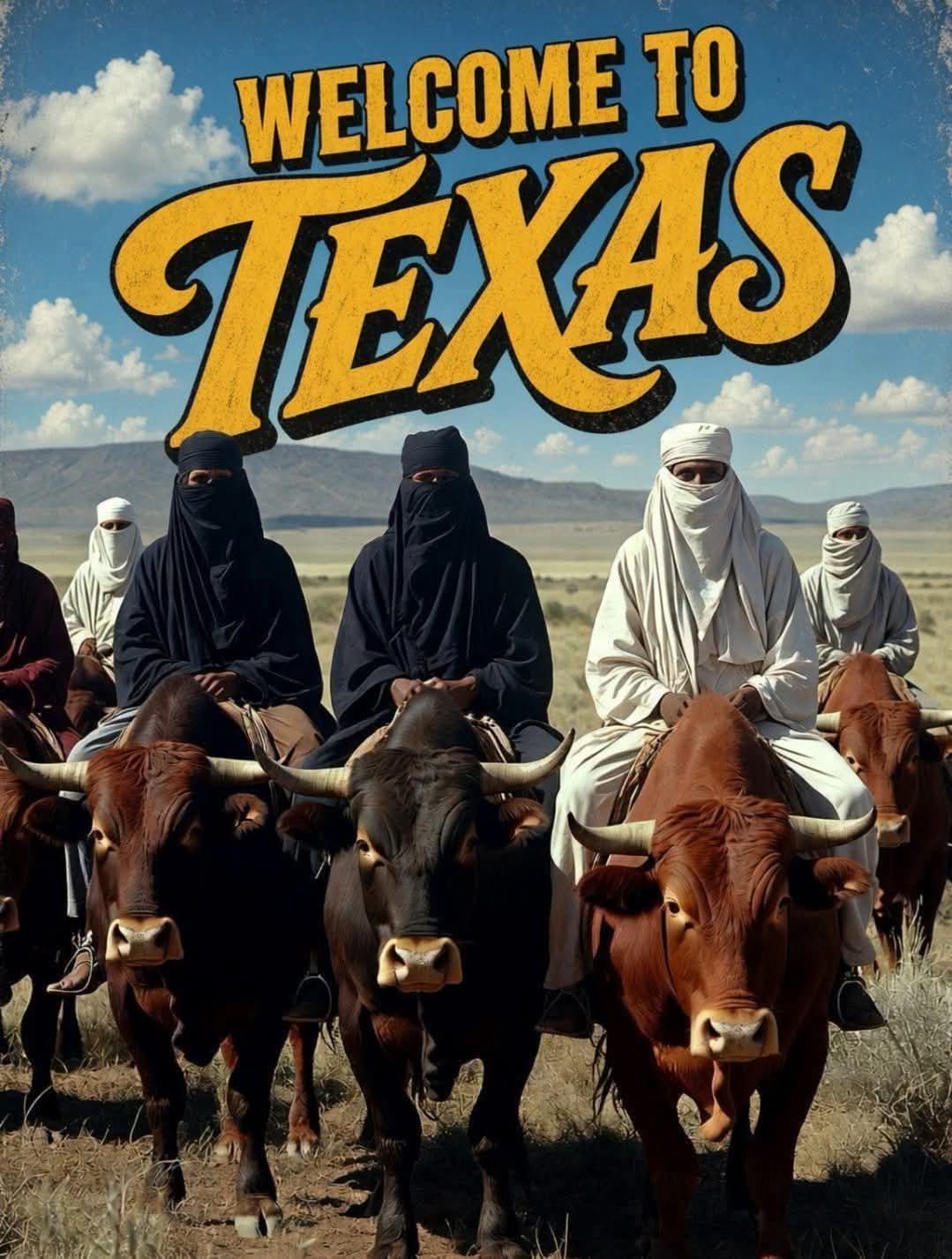
Americans are entitled to practice their religion and advocate their beliefs. They are equally entitled to live without having another person’s religious rules imposed on them through government coercion.
If religious leaders envision a future in which America is governed according to Islamic law, they should explain precisely what that means for the Constitution, the courts, religious minorities, women, and the freedom of individuals to dissent.
Because human rights are abused routinely in Muslim-majority communities around the world.
Florida has already taken significant action involving organizations that state officials associate with political Islam.
In December 2025, Gov. Ron DeSantis issued an executive order designating the Muslim Brotherhood and the Council on American-Islamic Relations (CAIR) as terrorist organizations for purposes of state executive action.
In July 2026, Florida announced plans to implement a new statutory designation process, and in September the Florida Cabinet approved rules governing that process.
The state’s actions seek to restrict public funding, contracts, and other forms of government support for designated organizations, subject to the applicable legal procedures.
CAIR has rejected the designation and challenged the state’s allegations. The Florida action is distinct from federal terrorist designations and has generated legal controversy.
The 2026 election has given some Islamic activists renewed confidence in their ability to influence America’s future.
The Muslim extremists are inside of the gates. Will they continue Islam’s history of conquest inside of the United States?
Judging by their political victories, they are already beginning to achieve their plans.
If the stolen Midterms aren't rectified, Texas is over and so is our Country.