


The Deep State media complex took another body blow to its J6 “MAGA insurrection” narrative on Thursday, as FBI Director Kash Patel and FBI Deputy Director Dan Bongino announced that they have finally arrested the perpetrator of the RNC and DNC pipe bomb threats that was the apparent “back up plan” should the Capitol Riots fail to disrupt the expected 2020 election objections.
The identity of the perpetrator debunks the left-wing media’s assumption that it was a Trump supporter that carried out the pipe bomb threats, which were suspiciously timed and with one dummy pipe bomb conveniently placed in proximity to the whereabouts of future Vice President Kamala Harris.
Far from being a “MAGA supporter,” the alleged perpetrator is not white (as Jake Tapper claimed on CNN after the news broke) and is reported to hold far-left views.
The Fake News media’s reporting on January 6 has been propaganda from the very beginning. And now its “MAGA insurrection” narrative is totally busted.
Federal agents on Thursday arrested 30-year-old Brian J. Cole Jr. of Woodbridge, Virginia, finally putting a face and name to the masked figure who planted pipe bombs outside the Democratic National Committee and Republican National Committee headquarters on January 5, 2021.
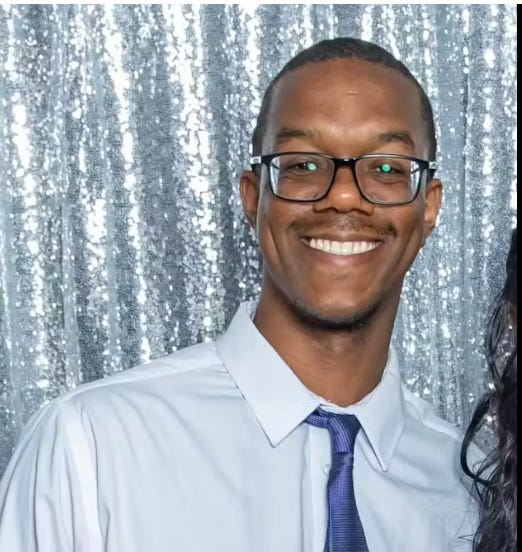
The arrest ends what should have been a straightforward manhunt but instead became a years-long fiasco that raised more questions about federal competence—and candor—than it answered.
Even now, major inconsistencies in the official narrative remain unresolved, and the timing of the arrest has only amplified public skepticism rather than quieted it.
According to newly unsealed charging documents, Cole purchased the bomb components over an 18-month span using his own credit cards at Virginia hardware stores and national chains.
The FBI affidavit describes him buying galvanized pipes, end caps, wiring, steel wool, battery connectors, gloves, timers, and various tools between 2019 and late 2020. His cell-phone data placed him within yards of both headquarters during the exact time window the suspect was seen on surveillance video placing the devices.
His Nissan Sentra was caught on license plate readers near Capitol Hill just minutes before the bombs were planted. He even made a restaurant purchase in the same neighborhood weeks earlier.
For anyone familiar with modern FBI investigative capability—geolocation, financial tracking, digital forensics—this is not the profile of a suspect who should take nearly half a decade to identify. That is the first major tension in the story: the suspect appears to be neither a criminal mastermind nor an off-grid operator. He left a digital paper trail modern investigators routinely compile in a matter of weeks.

Kyle Seraphin, who led FBI surveillance teams, told The Daily Wire that shortly after January 6, a counterintelligence team met with him at a firehouse in Falls Church, Virginia, to brief him on his next surveillance target: They had used security footage to track the person into a Metro station after he planted the bombs and identified the fare card used.
That fare card then enabled investigators to ascertain that the suspect exited at a Metro station in Northern Virginia, where security film showed the person getting into a vehicle. Both the automobile and the ticket card were registered to the same person: A former Air Force chief master sergeant who was now working as a contractor with a security clearance, they claimed.
Seraphin and his crew were assigned to monitor the person’s row home for many days, but the FBI denied his request to interrogate the individual, he claimed. They were then directed to go through low-priority leads on minor January 6 attendees before abandoning the target entirely, he said.
“Allegedly someone threw bombs around the Capitol which could have killed congressmen or a busload of nuns or anything, and the answer is you can’t follow this guy around — you have to go to headquarters and read ‘leads’ where someone said ‘I might’ve went to high school with some guy that was standing around the Capitol?’” Seraphin told The Daily Wire.
Seraphin said that the bomber was not necessarily the same person of interest as the vehicle and card’s registered owner, but that it was a very precise lead that, if investigated, had a strong potential of bringing police to the culprit.
“They found people based on their earlobes that were hanging out by a flagpole,” he said of the FBI’s otherwise sweeping January 6 investigation.
Seraphin told the outlet that the matter was being handled by the counter-intelligence section, which does not use “manhunters” to capture individuals and develop prosecutable cases. He said that counter-intelligence had called in his surveillance team, but then shut the operation down.
Seraphin remarked that it was not a surprise to him that the FBI had tracked down the bomber, and it would have been much more astonishing if they hadn’t.
“They can do telephonic capture and triangulate your phone in real-time… The bureau is far too competent to fail this,” he said. “When they had the World Trade Center bombing in ‘93 they went under four stories of rubble and were able to find a partial VIN number that they used to track it down to the people responsible. And you’re telling me you had a pristine, non-detonated bomb and they couldn’t find anything on it?”
There was further corroboration of Seraphin’s FBI story to the extent that the FBI is in possession of the license plate information and Metro Card information for the January 6 suspect.
“My partners and I have been lifetime data scientists,” Seruga said. “We own the digital ID of every mobile device/computer in the U.S. and have indexed and archived every IP address in the world. Our extensive experience in big and deep data, including geotracking and geolocation makes our dozens of data companies the top authority for providing data to corporations, law enforcement and U.S. government agencies like the CIA, NSA, DoD, DIA, NGA, NRO, FBI, as well as Interpol and foreign intelligence organizations.”
After remarking on Rep. Clay Higgins’ (R-LA) reports of “ghost buses” on the morning of January 6, Seruga remarked on data allegedly collected from the J6 pipe bomb suspect.
“We also tracked the infamous J6 ‘pipe bomber’ from one of these vans. Later, we eventually tracked them to a Virginia Metro station where a perfect capture of their vehicle license plate was made. The FBI has ALL of this information. Shortly after they were alerted, however, AT&T mysteriously ‘accidentally’ corrupted that and only that particular cell phone user’s data. Additionally, their mobile device was used hundreds of times before and after J6 accessing keycard required DOJ/FBI parking garages and buildings,” Seruga added.
Attorney General Pam Bondi openly criticized the four-year investigative standstill, saying the information identifying Cole “had been sitting at the FBI for four years.” Federal officials, even while declaring victory, admitted the arrest came from re-analyzing old evidence—not from a new tip, witness, or technological breakthrough.
FBI Deputy Director Dan Bongino said the bureau found Cole through “internal work” and that “there was no new witness.” The implication is unavoidable: the breakthrough evidence was always there.
The question becomes why this case stalled so completely and for so long, especially when the same federal agencies rapidly geolocated hundreds of ordinary January 6 protesters for misdemeanors and trespassing charges.
Why was this investigation—one involving live explosive devices placed at the doorsteps of both political parties—treated as if time were not of the essence?
Reporter Julie Kelly discussed on War Room that there may be another blow to the J6 narrative — the suspect, whose family actually sued Trump over immigration enforcement, actually had left-wing views.
Kelly notes that former FBI Director Christopher Wray himself had very suspicious responses when asked about the J6 pipe bomb suspect, and went out of his way to deny any potential anarchist, left-wing, or Antifa connection to J6.
Another major contradiction centers on the bombs themselves. The FBI publicly declared them “viable” devices that could have caused mass casualties. Yet leaked technical assessments suggested the opposite: the bombs used only 60-minute kitchen timers and lacked any secondary or remote detonation system. If planted on the night of January 5, they would have detonated long before being discovered on the afternoon of January 6. Later, a former FBI agent said technicians told him the bombs “could not detonate.” These claims directly conflict with each other.
If the devices were truly viable, why did responding officers at the DNC behave so casually—remaining in their vehicles, then strolling within feet of the object, even allowing children to pass directly in front of the bench? If the devices were not viable, why did the FBI insist for years that they were? The arrest of Cole does nothing to reconcile these contradictions. It only reopens them.
There are further timing issues difficult to ignore. The bombs were found at essentially the exact moment Congress began the 2020 election certification, triggering building evacuations that diverted Metro Police and U.S. Capitol Police resources as the first breaches occurred.
The bomb discoveries interrupted the certification timeline itself, heightening the chaos. Whether or not this was Cole’s intention, the timing of the disruptions cannot be dismissed as coincidence. It is one of the central open questions federal investigators still refuse to address directly.
Also lingering is the issue of then–Vice President-elect Kamala Harris. She was inside the DNC headquarters on the morning of January 6, only about twenty feet from the location where the bomb was later found. Yet Harris never publicly acknowledged this, and her security detail’s behavior raises obvious concerns.
A standard protective sweep should have discovered the device immediately—especially one sitting in plain sight near a bench. Government officials have offered no explanation for why the Secret Service failed to detect it, nor why its agents appeared calm and even casual when informed of the bomb’s presence.
This matters because the official story asserts the bombs were planted the night before. If so, they should have been detected during the mandatory sweep. If they weren’t detected, why not? And if they were not actually present that morning, when were they placed? The arrest of Cole does not clarify the timeline; it simply asserts he planted them—something already assumed. The timeline problem, however, remains unresolved and continues to undermine confidence in the official account.
Complicating the picture further are the many disputed or flawed theories that emerged over the last several years, including sensational claims—such as the Blaze report suggesting a former Capitol Police officer was a 94–98% match to the suspect’s gait. That story circulated widely online before being contradicted by CBS sources who said she had an alibi. The Blaze report remains unverified and is very likely incorrect, but its traction reflected the vacuum created when the FBI provided almost no credible updates for years. When institutions fail to answer obvious questions, alternative explanations—credible or not—fill the void.
Against that backdrop of contradictions, delays, and missteps, the arrest of Cole offers closure only on the narrowest question: who physically placed the devices. It does not answer how a suspect with such an obvious profile remained unidentified. It does not answer why the FBI failed to pursue leads flagged by its own agents in 2021. It does not answer inconsistencies about bomb viability, discovery timing, the Secret Service’s behavior, or why political leaders—especially Harris—never addressed their proximity to explosives that allegedly threatened their lives.
Investigators have also not explained why they believe Cole targeted both parties. Authorities described him privately as an anarchist sympathizer, but no explicit motive has been offered.
Was it anti-government ideology? A desire to create maximum confusion? Or was it simply executing the “back-up plan” to cause disruption to the expected election objections? Based on the FBI’s “investigation” of the pipe bomber, there is strong enough evidence to suspect a cover-up, if not outright complicity.
The case is now proceeding forward without any public accounting of motive—yet motive is essential to determining whether the bombs were meant to detonate, to distract, or to manipulate political conditions surrounding the certification of the 2020 election.
What the Cole arrest truly reveals is less about the suspect himself and more about the failings of the system tasked with finding him.
The arrest of Brian Cole ends one chapter of the January 6 pipe bomb mystery, but it does not close the book. If anything, it underscores how much of the story remains unexplained and how deeply the public’s doubts were earned—not imagined. Until the government addresses the gaps directly and transparently, the case will remain unfinished, no matter how many charges are filed.
Maybe there were two pipe bombers. One that worked for the capital policewoman and this pasty. Something stinks. By the way, the person implicated by the Blaze said nothing for almost two weeks and then came out with the “playing with puppies” alibi. It’s quite easy to time stamp videos …. She works for the CIA now … and from what I’m reading she has an older dog.
BTW, this is an EXCELLENT post. Thank you. I shared with many whom I know were there on J6.